
Preparing for a Job Interview
A Transformative ExperienceWhether you're embarking on your first career or pursuing a career change, thorough preparation for the interview is essential. In today's competitive job market, a professionally crafted resume is a wise investment that can set you apart from other candidates. A well-written resume and cover letter greatly increase your chances of being called for an interview. Rather than viewing the interview as an intimidating process, consider it as a mutually beneficial discussion to determine if the role aligns with your aspirations and if the company is a good fit for you. Remember, adequate preparation is just as crucial as the interview itself. Initial ImpressionsFrom the moment you make contact with a prospective employer, you are being evaluated as a potential employee. Your professionalism, language proficiency, interview attire, and genuine interest in the position will all contribute to this assessment. Comprehensive PreparationPreparing for the interview can often be more stressful than the actual event. To alleviate this stress and present your best self, it is crucial to leave nothing to chance. Follow these guidelines for comprehensive preparation:
During the InterviewDuring the interview itself, pay attention to the following aspects:
Post-Interview ActionsAfter the interview, follow these steps to leave a lasting impression:
You may also consider:
About the AuthorMandy Fard is a Certified Professional Resume Writer (CPRW, CMRW) and Recruiter with decades of experience in assisting job seekers, working directly with employers in multiple industries, and writing proven-effective resumes. 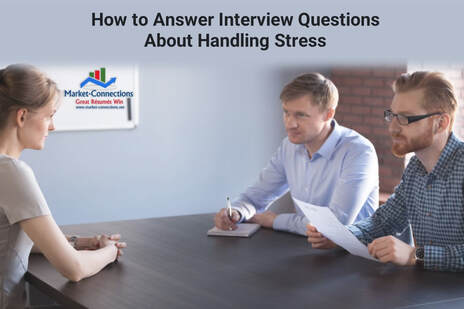
How to Answer Interview Questions About Handling Stress
If you haven't experienced numerous interviews, they can be quite anxiety-inducing. Personally, I enjoy attending interviews as I am intrigued by how managers assess and prioritize skills during the selection process. Regardless of whether you aspire to become an air traffic controller or a gardener, it's likely that you will encounter interview inquiries regarding your stress management abilities. This is a significant aspect in almost any professional environment. Gallup's most recent State of the Global Workplace survey reveals: "Worldwide, 44% of employees said they experienced a lot of stress the previous day. This is the second year in a row worker stress reached record levels. Employee stress rose in 2020, likely due to the pandemic. But employee stress has been rising for over a decade." What's concerning is that a significant percentage of those surveyed admit to feeling so overwhelmed that they have thoughts of resorting to aggression towards their colleagues. Understandably, employers are deeply troubled by this state of affairs. During the hiring process, managers might inquire about your ability to handle high workloads and dissatisfied customers. They might even explore the potential impact of your personal life on your behavior. You’ll probably make a more favorable impression if you think about your answers in advance. Try these tips for talking about stress during a job interview. Tips for Your Interview
Tips for Your Work Life
It’s helpful for you and your future employer to recognize the impact of job-related stress. Your interview could be a starting point for maintaining a healthy and supportive work environment. SOURCE: https://www.market-connections.net/blog/how-to-answer-interview-questions-about-handling-stress You May Also Like TOP 50 MOST COMMON INTERVIEW QUESTIONS https://www.market-connections.net/blog/top-50-most-common-interview-questions INTERVIEW BRAG BOOK https://www.market-connections.net/blog/interview-brag-book GET MORE INTERVIEW INVITATIONS https://www.market-connections.net/blog/get-more-interview-invitations STAR METHOD INTERVIEW QUESTIONS https://www.market-connections.net/blog/star-method-interview-questions 5 TIPS TO REDUCE STRESS BEFORE A JOB INTERVIEW https://www.market-connections.net/blog/5-tips-to-reduce-stress-before-a-job-interview DIGITAL INTERVIEWING https://www.market-connections.net/blog/digital-interviewing About the AuthorMandy Fard is a Certified Professional Resume Writer (CPRW, CMRW) and Recruiter with decades of experience in assisting job seekers, working directly with employers in multiple industries, and writing proven-effective resumes. 
How to Create a Company Page on LinkedIn
Tips to Create a LinkedIn Company PageYour company page determines who engages with your content, follows you, and picks your business over the competition. Your page should make it easy for people to understand your business and the type of services you offer. A well-optimized LinkedIn business page provides a lucrative opportunity to build your brand, attract new prospects, grow your business through LinkedIn marketing, become a market leader, and gain other multifarious benefits in the long run. So, create a professional page that attracts users and represents your brand right. Fill in all the information on your profile to improve visibility. Add your company name, description, size, location, website URL, industry, and featured groups to increase your chances of appearing on the SERPs. Let’s review the details on how to create a company page on LinkedIn: Upload a Suitable, Decent Page Picture and Banner A profile picture always makes the first impression as it is the primary thing that people will notice on your company page. As per statistics, a page with a profile picture gets significantly more visitors in contrast to one having no image. So, you can judge how crucial it is to have a good image. Pick your company’s logo and resize it to fit the requirements and make it easy for your target audience to identify you Make sure you add a professional banner also known as Background Photo above the company logo. You can get creative here as there are no concrete rules for it except the sizing and requirements. Write a Gripping “About” Section with KeywordsYou need to leverage this section to tell visitors everything they need to know about your company. You can write a well-optimized paragraph ranging between 1800-2000 characters which must be drafted in a simple, accessible and readable language to highlight your business goals. This section is intended to narrate your company’s story and help the audience realize the worth of your product or service. Additionally, it must answer 6 basic questions namely:
Optimize your description and make sure your target audience easily understands what you do. Mention all your main services or offers in your description. Identify high-ranking keywords within your niche and incorporate them into your strategy. Add at least 3 popular keywords to make your content discoverable. Create CommitmentsCommitments are promises to your employees and the broader community. Attract top talent by showcasing what your organization cares about and what it’s really like to work there. Make sure to include relevant links to resources, public-facing reports, and accurate credentials to demonstrate the authenticity of your commitments. Do not use this space to reiterate your organization’s mission statement and/or promote your organization’s products and services. Here is how LinkedIn describes it: Increasingly in today’s market, job seekers are evaluating potential employers based on their values. They’re interested in knowing where companies stand on issues that are important to them, such as DEI, work-life balance, sustainability, etc. To provide greater insight and connections, LinkedIn is enabling employers to highlight these commitments on their LinkedIn company page to define their talent brand and values. Companies can add a section to their company page called Our Featured Commitments that allows them to showcase values along with more meaningful content, including reports, certifications, articles, blogs, and videos. Members can easily view these commitments and the documentation provided by each company to assess authenticity. These commitments are featured prominently on the About section of a company page. Companies can feature up to 5 commitments on their Company Page, such as:
Follow Relevant PagesFollow organizations to stay engaged with relevant content in your Page feed. Add organizations in your industry and engage. Post Relevant Content RegularlyYour content is the lifeblood of your page. It determines who follows and stays with you. So, share valuable content that’s relevant to your business. The kind that your target audience wants, prefers and engages with mostly. You can also share links to some of your finest work. For example, a viral blog post, if you are a blogger. It is statistically noted that companies posting weekly updates see a 2x engagement boost, therefore it is a must to update your page with fresh content regularly. There are ample ways to achieve this: articles, images, videos, documents, and a lot of stuff.
Create AwarenessApart from the paid LinkedIn ads and other paid advertising ways, some simpler techniques to create awareness is to promote your page on other social media platforms such as Twitter, Facebook, and other popular social media platforms. Also, you can link your new profile to your site. If your website already has a steady flow of traffic, you can get more connections. Grow Your Audience
Build Showcase PagesA Showcase page is an extension of your LinkedIn Company Page and provides a dedicated space to share tailored content and engage with a targeted audience. Every Showcase Page is intended to spotlight specific aspects of your business. Showcase pages allow you to highlight specific brands, products, initiatives, or business units within your organization. By creating and effectively managing Showcase pages, you can enhance your company's visibility, target specific audiences, and showcase your unique offerings. To create a Showcase page, follow these steps:
Create Events on Your LinkedIn Company PagePosting events on a LinkedIn Company Page provides an excellent opportunity to showcase your organization's activities, attract a targeted audience, and foster meaningful engagement. It's a powerful tool for promoting your brand, networking with professionals, and driving participation in your events. Ensure that the events are relevant to your target audience and align with your company's objectives.
Promote Your EventLeverage your Company Page's reach by promoting your events through regular posts. Share engaging content related to the event, such as speaker profiles, relevant articles, or event teasers. Use relevant hashtags and keywords in your event titles and descriptions to improve discoverability. Consider leveraging LinkedIn's event features such as event reminders and RSVP options to enhance engagement, generate interest, and encourage attendance. Engage with AttendeesMonitor the event page for comments or inquiries. Engage with attendees by responding to comments and inquiries promptly and offering helpful information to enhance attendees’ experience, fostering a positive networking atmosphere. You may also be interested in:
About the AuthorMandy Fard is a Certified Professional Resume Writer (CPRW, CMRW) and Recruiter with decades of experience in assisting job seekers, working directly with employers in multiple industries, and writing proven-effective resumes. 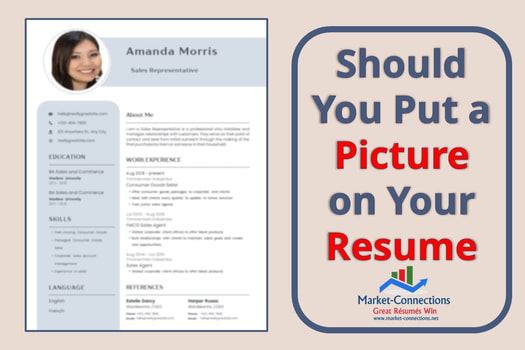
Should You Put a Picture on Your Resume
In today's competitive job market, knowing how to make your resume stand out is essential. However, some job seekers make a questionable choice by including their picture in their resumes. While it may seem like a harmless addition, including a picture in your resume can have unintended consequences that could hinder your chances of securing the job you desire. Let's explore the reasons why it's a bad idea to include a picture in your resume and offer an alternative solution. Unconscious Bias and DiscriminationOne of the main reasons to avoid including a picture in your resume is to eliminate the potential for unconscious bias and discrimination. Human beings naturally form opinions and judgments on appearances, which can lead to unfair evaluations and discrimination based on factors such as race, gender, age, or physical appearance. By omitting your photo, you ensure that the focus remains on your qualifications and skills, promoting fair and equal opportunities for all candidates. Equal OpportunityThe primary purpose of a resume is to showcase your qualifications, experiences, and achievements relevant to the job you're applying for. Including a picture can detract from this objective and introduce unrelated personal biases. Employers should evaluate candidates based on their merit, expertise, and potential to contribute to the organization, rather than making judgments based on appearance. By excluding a photo, you level the playing field and create an equal opportunity for all applicants. Legal ConsiderationsIn various jurisdictions, including a picture on a resume can potentially violate anti-discrimination laws. These laws aim to protect individuals from discrimination based on protected characteristics. When a picture is included, it provides unnecessary personal information that may influence hiring decisions and contribute to biased judgments. To ensure compliance with these laws and maintain fair hiring practices, it's advisable to avoid including pictures in resumes. Consistency and ObjectivityEmployers often have a standardized process for evaluating resumes, involving multiple individuals within the organization. By including a picture, you introduce subjective elements that can vary from person to person, leading to inconsistent evaluations. Objective criteria, such as qualifications, experience, and skills, should be the basis for hiring decisions. By removing the picture, you allow employers to focus on these essential aspects, fostering a more consistent evaluation process. An Alternative: LinkedIn Profile:While it's not recommended to include a photo in your resume, there are alternative ways to showcase your professional image. LinkedIn, a popular professional networking platform, provides an excellent platform for building an online professional presence. It allows users to create a profile that includes a professional photo along with their qualifications, experience, skills, and more. LinkedIn offers a free basic profile option that enables you to create a professional presence, connect with other professionals, and showcase your qualifications to potential employers. You can include a high-quality photo that presents you in a professional light. This way, employers who are interested in viewing your photo can do so in a controlled environment specifically designed for professional networking and job searching. * * * * * * * * * * * * * * * * * * * When it comes to creating a compelling resume, it's crucial to present yourself in a way that highlights your qualifications and skills rather than personal appearance. By omitting your picture from your resume, you eliminate the potential for subjective evaluations. Remember, employers should be interested in your capabilities and what you can bring forth to their company. Let your qualifications speak for themselves, and increase your chances of securing the job based on merit and expertise. For those who wish to share their photo with potential employers, LinkedIn offers a convenient and professional platform to do so. Take advantage of this opportunity by creating a LinkedIn profile that showcases your professional image along with your qualifications, experience, and skills. Membership options are also available on LinkedIn, but anyone can create a basic profile for free, allowing you to present yourself professionally without the need to include a photo in your resume. For further assistance, you can also hire Professional LinkedIn profile writing services. YOU MAY ALSO CONSIDER: BEST COLORS FOR RESUME: https://www.market-connections.net/blog/best-colors-for-resume RESUME WRITING TIPS AND SAMPLES: https://www.market-connections.net/blog/resume-writing-tips-and-samples CUSTOMIZE YOUR RESUME: https://www.market-connections.net/blog/customize-your-resume EDIT YOUR RESUME: https://www.market-connections.net/blog/edit-my-resume RESUME WRITING OR RESUME REWRITE: https://www.market-connections.net/blog/resume-update-or-resume-rewrite About the AuthorMandy Fard is a Certified Professional Resume Writer (CPRW, CMRW) and Recruiter with decades of experience in assisting job seekers, working directly with employers in multiple industries, and writing proven-effective resumes. 
Business Growth with LinkedIn Marketing
In today's digital era, businesses are constantly seeking effective strategies to drive growth and expand their reach. LinkedIn, the world's largest professional networking platform, provides a powerful opportunity for businesses to achieve their marketing goals and generate valuable leads. Let’s explore how businesses can leverage LinkedIn marketing to drive significant business growth. Targeted Audience ReachLinkedIn boasts a user base consisting of professionals from various industries and backgrounds. This presents a unique advantage for businesses to connect with their target audience directly. By utilizing LinkedIn's powerful targeting options, businesses can narrow down their reach to specific demographics, job titles, industries, and even company sizes. This targeted approach ensures that your marketing messages are reaching the right audience, increasing the chances of generating quality leads. Showcase Thought LeadershipLinkedIn offers an ideal platform for businesses to establish thought leadership and showcase their expertise. By regularly sharing valuable content, industry insights, and thought-provoking articles, businesses can position themselves as trusted authorities in their respective fields. Thought leadership not only boosts brand credibility but also attracts potential clients or customers who are seeking expert advice or solutions. Engage with LinkedIn GroupsLinkedIn Groups provide a valuable opportunity for businesses to engage with like-minded professionals and industry peers. Joining relevant groups allows businesses to participate in discussions, share insights, and establish meaningful connections. Engaging with LinkedIn Groups helps businesses expand their network, gain industry insights, and build relationships that may lead to potential business opportunities. Sponsored Content and AdsLinkedIn offers a range of advertising options, including sponsored content and ads, to promote your business and drive lead generation. Sponsored content allows businesses to amplify their reach by promoting valuable posts to a targeted audience. LinkedIn ads provide powerful targeting capabilities, allowing businesses to refine their ad campaigns based on specific criteria such as job titles, industries, and geographic locations. These advertising features enable businesses to increase visibility, generate leads, and ultimately drive business growth. LinkedIn Company PagesCreating a LinkedIn Company Page allows businesses to establish a dedicated online presence for their brand. It serves as a platform to share company updates, industry news, and relevant content with followers. Optimizing the company page with engaging visuals, compelling descriptions, and regular updates enhances brand visibility, fosters brand loyalty, and attracts potential clients or customers. Networking and Relationship BuildingLinkedIn is renowned for its networking capabilities. Businesses can leverage this platform to forge meaningful connections and build relationships with potential clients, customers, partners, and industry influencers. Engaging with connections through personalized messages, congratulating them on their achievements, and sharing relevant content helps nurture relationships that may lead to business opportunities or referrals. LinkedIn marketing presents immense potential for businesses to drive significant growth and achieve their marketing objectives. By leveraging targeted audience reach, showcasing thought leadership, engaging with LinkedIn Groups, utilizing sponsored content and ads, optimizing LinkedIn Company Pages, and focusing on networking and relationship building, businesses can unlock the power of LinkedIn to drive business growth. Embrace LinkedIn as a strategic marketing tool and harness its capabilities to propel your business forward in the competitive digital landscape. You may also consider:
About the AuthorMandy Fard is a Certified Professional Resume Writer (CPRW, CMRW) and Recruiter with decades of experience in assisting job seekers, working directly with employers in multiple industries, and writing proven-effective resumes. 
Job Searching: Student Request for a Professor Recommendation
This recommendation request is designed to help collect endorsements from professors — especially for students with few internships or little work experience. It includes an instruction guide, contact tracking, and template to make the request. How to Secure References for Graduates with Limited Work ExperienceAs graduation season arrives, many new graduates find themselves faced with the daunting task of entering the job market. However, for those who have limited internships or work experience, this can be an added challenge. In such cases, seeking endorsements from professors can be a valuable asset to bolster their credentials and increase their chances while job searching. In this blog post, we will explore effective strategies to obtain professor endorsements for students with limited work experience, helping them showcase their potential and stand out among the competition. Develop Meaningful RelationshipsBuilding strong relationships with professors is essential for obtaining endorsements. Actively engage in class discussions, attend office hours, and demonstrate genuine interest in the subject matter. By investing time and effort into these relationships, students can gain professors' trust and pave the way for successful endorsements. Most people who have read Dale Carnegie's book on relationships (How to Win Friends and Influence People) have found it beneficial. Perhaps reading it at the start of your career can be beneficial to you throughout your career. Seek Opportunities for Additional ResponsibilitiesIn the absence of internships or work experience, students can actively participate in research projects, academic committees, or assist professors with their ongoing work. These additional responsibilities showcase their dedication, commitment, and willingness to contribute beyond the classroom. Such experiences provide professors with firsthand knowledge of a student's capabilities, making them more inclined to provide a strong endorsement. Make sure you know how to show unpaid experiences on the resume. Excel in Coursework and ProjectsStudents should strive for academic excellence by excelling in their coursework and demonstrating exceptional performance in assignments and projects. By consistently producing high-quality work, they create a positive impression on professors, who can vouch for their intellectual capabilities and work ethic. Requesting recommendations from professors who have witnessed their academic achievements can significantly enhance their endorsements. Actively Engage in Class ParticipationActive class participation allows students to showcase their knowledge, critical thinking skills, and ability to articulate ideas. By asking insightful questions, sharing unique perspectives, and engaging in productive discussions, students demonstrate their intellectual curiosity and passion for learning. Professors who observe their active involvement are more likely to provide personalized endorsements highlighting their academic strengths and contributions to the classroom environment. Request a Meeting to Discuss Goals and Career AspirationsArrange a meeting with professors to discuss career goals and aspirations. By sharing their ambitions, students can seek guidance and mentorship from professors who may have industry connections or relevant expertise. These conversations not only demonstrate their proactive approach but also provide an opportunity for professors to gain a deeper understanding of their career objectives, leading to more tailored endorsements that align with their chosen career path. Showcase Relevant Coursework and ProjectsStudents can selectively highlight coursework and projects that are directly related to their desired industry or job role. By showcasing their knowledge and skills in these areas, they can demonstrate practical expertise, even in the absence of traditional work experience. Professors can then focus their endorsements on the specific competencies and achievements showcased through these academic endeavors. For new graduates with limited work experience, obtaining professor endorsements can be a valuable asset when entering the job market. By nurturing meaningful relationships with professors, actively engaging in coursework and projects, seeking additional responsibilities, and showcasing their academic achievements, students can secure personalized endorsements that highlight their potential and make a positive impression on potential employers. These endorsements not only validate their skills and capabilities but also provide a competitive edge in a crowded job market. With the support of professor endorsements, graduates can confidently embark on their professional journeys, armed with the recognition and support of respected academic mentors. INSTRUCTIONS: Student Request for a Professor RecommendationA third-party endorsement or recommendation is a powerful addition to a résumé, cover letter, and/or LinkedIn profile. Professors take the writing of recommendations very seriously, and they expect students to do the same. Recommendations reflect not just the quality of the student, but also the integrity of the professor. Here are some guidelines for requesting a recommendation:
Please provide copies the sample form below to the professors of your choice. You can brainstorm/record your contacts below:
Note: Don’t be discouraged if a professor declines to write a recommendation. People are busy — they don’t always have the time. Or they may have personal reasons to decline. If you get a “no” response, work your way down the list and ask another professor! Be sure to send your professor a thank you note when you receive a recommendation. Professors spend a lot of time on these documents; it’s nice to be acknowledged. And be sure to let your professor know if you get the role you’re pursuing! Student Request for a Professor RecommendationStudent Name: _________________________________________________________________ Professor Name: ________________________________________________________________ Course(s) Taken/Semester: _______________________________________________________ Date You Would Like The Recommendation Returned By: _______________________________ I am preparing my résumé and LinkedIn profile and would appreciate the opportunity to include a recommendation/endorsement from you. Specifically, I am looking for 3-5 sentences that would give a prospective employer an idea of how I might be an asset to their organization, based on your knowledge of me (including my skills, knowledge, and experience) and my academic performance in your classroom. Of course, if you can’t write a recommendation for me, I completely understand. Please do not feel an obligation to say yes. However, if you are willing to provide content for my career materials, I would appreciate it! Please email your response to me at the email address below or text me and I will come by to pick it up. Thank you! Student Email Address: __________________________________________________________ Student Phone Number: _________________________________________________________ You may also cnsider:
About the AuthorMandy Fard is a Certified Professional Resume Writer (CPRW, CMRW) and Recruiter with decades of experience in assisting job seekers, working directly with employers in multiple industries, and writing proven-effective resumes. 
Top 50 Most Common Interview Questions
Top Questions Asked in an InterviewWhile many people opt for interview coaching services to practice their interview skills, others prefer to prepare on their own. Here is a list of the 50 Most Common Interview Questions which serve as a foundation for many other interview inquiries. It's important to know how to sell yourself in an interview. When crafting your responses, always consider how you can highlight your Key Selling Points. It's also beneficial to come prepared with innovative ideas about how you would contribute to the role if hired, as this can impress employers. Make sure you are also familiar with the STAR method interview questions. During the interview, remember to exercise tact and discretion. One tricky question that may arise is, "What other companies are you considering?" It's important to be honest without divulging too much or implying a preference for another job. Similarly, questions like "Why did you leave your last job?" and "What would you do differently if you were in charge of this company?" require diplomacy and minimal negativity. Keep in mind that your interviewer's questions may not always extract the specific information they seek. Ultimately, it's your responsibility as the interviewee to provide sufficient details about your background and experiences to answer the crucial question: "Why should we hire you?"
SOURCE: https://www.market-connections.net/blog/top-50-most-common-interview-questions You may also be interested in:
About the AuthorMandy Fard is a Certified Professional Resume Writer (CPRW, CMRW) and Recruiter with decades of experience in assisting job seekers, working directly with employers in multiple industries, and writing proven-effective resumes. 
Remote Jobs Hiring
Remote Jobs HiringIn the ever-evolving landscape of work, the concept of a remote career is becoming ever more popular. Remote work has already doubled and is expected to increase by more than 87% by 2025, according to the employment platform FlexJobs. The pandemic played a big role in the increase, but there are other factors too. Cutting down on commuting helps fight climate change and may lower turnover. A Forbes survey found that 97% of employees don't want to return to the office full-time. If you're job hunting or about to start, you have more options than in the past. Learn how to make remote work part of your criteria for finding a new position. A List of 54 Websites with Remote Jobs HiringBelow is a list of 54 specialized websites currently listing remote work:
Finding Remote Jobs
Negotiating to Make Your New Position Remote
When asked if they enjoyed working from home, 82% of workers agreed or strongly agreed, according to another survey by Forbes. Many studies show that productivity remains high too. Finding a remote job could turn out well for you and your next employer. SOURCE: https://www.market-connections.net/blog/remote-jobs-hiring About the AuthorMandy Fard is a Certified Professional Resume Writer (CPRW, CMRW) and Recruiter with decades of experience in assisting job seekers, working directly with employers in multiple industries, and writing proven-effective resumes. 
Resume for Board of Directors
When asked for a resume for a board position, you might wonder how it's different from a job resume. Writing a resume for a board position requires understanding your target audience. Whether corporate or nonprofit, industry-specific, or skill-focused, knowing how board members are recruited and what they seek is key. Tailor your resume's tone, content, and keywords accordingly. Let's explore the essential elements for an impactful board position resume. Corporate or Nonprofit BoardBefore examining the similarities and differences between the two types of boards, first keep in mind the overarching differences between corporations and nonprofit organizations.
Whether the board oversees a Fortune 500 company, another type of for-profit company, or a nonprofit organization, there are more similarities than differences. Every board has written articles of incorporation, bylaws, and governing principles that outline the responsibilities of the board of directors. Standard board policies cover member independence, conflict of interest, conduct/ethics code, expectations, confidentiality, and indemnification. Taking the time to familiarize yourself with these when targeting a specific board of directors will help you formulate your resume strategy. Both for-profit and nonprofit boards have a responsibility to approve, remain current with, and oversee the organization’s strategic plan, putting considerable emphasis on strategic thinking as a desired skill in filling board seats. Because they generally have a higher level of participation in developing the plan from its initial stages, members of nonprofit boards and start-up companies often serve on one or more strategic planning committees. Overseeing the financial wellbeing of the organization they represent is a primary responsibility of corporate and nonprofit boards; however, there are some key differences. Corporations have an obligation to deliver a financial return to stakeholders; therefore, corporate boards are focused on net earnings, stock prices, and dividend rates. Although many nonprofit organizations have turned their attention toward building and managing investment portfolios, they still rely heavily on fundraising. Because of this, nonprofit boards have a different focus in how they operate, and they consider a member’s net worth or ability to financially support the organization as essential to fulfilling their mission and goals. Bringing in a variety of perspectives, backgrounds, and experiences can be key to an organization’s success. Whether the board is a for-profit or nonprofit, board member diversity (e.g., gender, socio-economic background, race, religion, and nationality) has become a high priority. Boards strive to mirror the demographic of their customers/clients and meet the interests of their regulators and stakeholders. All boards have an obligation to serve as ambassadors for the organization they support, educating influencers and the community about the importance of what they do. And all boards face the same key challenges — rapidly changing technology, market competition, regulatory restrictions, limited resources, and finding and retaining good people. Just as a jobseeker’s resume must illustrate an understanding of these challenges and the candidate’s ability to address them, a resume for a board of director candidate must do the same. Board Selection ProcessBefore we begin looking at the structure and content of the resume, it is helpful to know who will be reviewing the resume, and what they are looking for. For-profit board searches are often conducted by executive search firms, like Spencer Stuart or RSR Partners. Typically, a nominating and governance committee will work with the recruiter to discuss their needs and identify board candidates. The company CEO — and possibly the entire board — will interview and select finalists. Th competition for a spot on a corporate/for-profit board is always fierce. Since for-profit companies have an obligation to deliver a financial return to shareholders, they seek board members with experience starting, running, and growing successful businesses. Expertise in a specific area of operations — such as finance, mergers & acquisitions, or legal — may also be desirable. BoardProspects.com, an online community and recruitment platform for existing and prospective board members, is a reputable source for gaining insight on what companies look for and learning about the skills and backgrounds of existing board members. To get a feel for what a specific publicly traded company looks for, it is also helpful to read their annual proxy statement. With the exception of large, high-profile organizations — like AARP or the American Red Cross — there is far less competition for nonprofit board positions. Like for-profit boards, they look for members with a wide range of skills, but they also want people with expertise in running nonprofit programs, managing community relations, and facilitating fundraising initiatives. BoardWorks has characterized the board selection process as more complex than selecting a job candidate for a management position. When recruiting for a management position, a company is looking for someone with an identifiable skill set to fill a well-defined slot in an organizational chart. By contrast, board appointments tend to be something of a jigsaw puzzle in which the final picture is not crystal clear and can be assembled in many ways. The challenge is to find someone to appoint on their merits who will also fit into and complement an existing boardroom team. BoardWorks states in one of its newsletters that “a particular challenge for selection panels is evaluating applicants who can strengthen the board in ways that were not anticipated before the recruitment process commenced.” Both for-profit and nonprofit boards are legally obligated to follow their bylaws, which may include specific criteria for board size, structure, and composition. Beyond what is specified in the bylaws, the board selection process often involves a more or less formal version of a grid by which to assess and rank candidates. Knowing what is included in this grid will certainly help in knowing what to emphasize on the resume. BoardSource, a Washington, D.C.-based organization dedicated to building strong nonprofit boards, created a board recruitment matrix that breaks down a candidate’s areas of expertise, leadership qualities, access to a variety of resources, network/connections, as well as personal style, age, gender, race, and ethnicity. Similar matrices can be found online for assessing for-profit board member candidates. In an infographic entitled What Makes a Good Board Member?, BoardSource identified these six characteristics:
At the top of this list for both corporate and nonprofit boards is the ability to get along well with others, combined with a high degree of self-awareness, and emotional intelligence. Planning Your Resume ContentNow that you know a little more about the type of board you are targeting — corporate or nonprofit — and what criteria go into the selection process, you can begin planning what to include in your resume and how to present it. Identify your areas of expertise and how they might benefit your target board. Both corporate and nonprofit boards have a need for members with executive resumes whose experience and expertise fall within the following areas: budgeting and finance, human resources, technology, strategic planning, risk management, succession planning, legal, compliance, marketing, public relations, and consensus building. Experience within the same or similar industries, and insight about customer/client needs is also essential. And both types of boards value members who have access to a variety of resources (government connections, attorneys, accountants, consultants). Corporate boards also look for global experience and expertise in matters such as mergers and acquisitions, research and development, IPOs, shareholder proposals, and investments. A few terms that are commonly heard in corporate boardrooms — and that you’ll want to consider including as keywords in a corporate board resume — are earnings per share, EBITDA, quarterly returns, stock buyback, real estate transactions, Sarbanes-Oxley, and Dodd-Frank. On the other hand, nonprofit boards seek members whose expertise may include grant writing, fundraising campaigns, donor relations, endowments, 501(c)(3) applications, and volunteer management. Some of the keywords that you’ll want to include in a nonprofit board resume are donor capacity, donor relations, restricted/unrestricted gifts, pledges, stewardship, community education, foundations, and capital campaigns. Keywords representing personal style that belong in both corporate and nonprofit resumes include consensus builder, collaborator, motivator, strong communicator, and diplomatic. Although you want to draw attention to your contributions and accomplishments, avoid language that suggests you single-handedly brought about results. Whereas the content and tone of a jobseeker’s resume is geared toward promoting the candidate and, ideally, elevating his or her career, the president and CEO of BoardSource made the distinction in tone and content clear in the following statement: “When you join a board, what you are really saying is that you agree to put your personal interests and ambitions in the background. You are there to best serve the interest of the company or organization.” Constructing the ResumeThe overall format of your board resume is not that different than your job search resume; however, sections that are considered optional or secondary to actual work experience have more credence when positioning yourself for a board of director’s role.
Target: Board of Directors — Commercial Banking & Finance Financial Analysis | Mergers & Acquisitions | Audits
In her article, Boardroom Bound? Ten Steps to Get You There, Kay Koplovitz nicely summarizes the key points:
Differences Between a Board Resume and an Employment Resume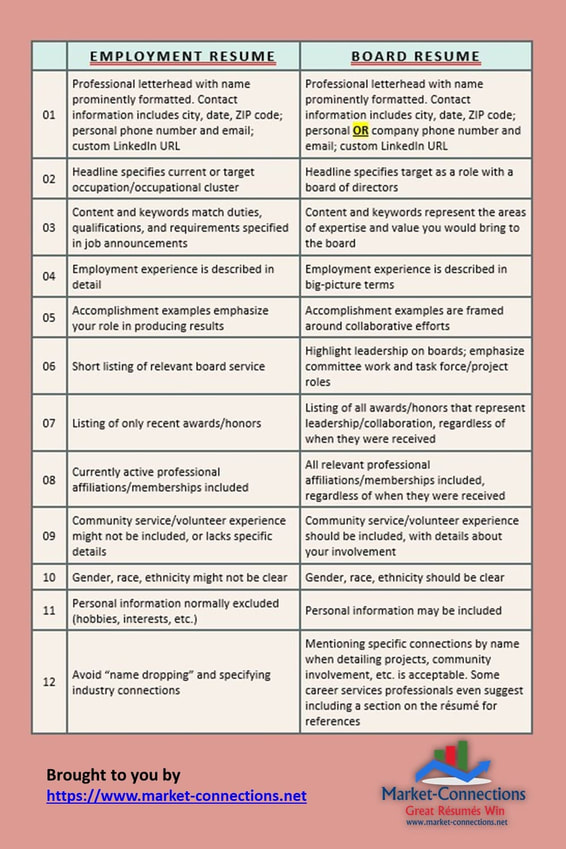 Board Resume vs Employment Resume About the AuthorMandy Fard is a Certified Professional Resume Writer (CPRW, CMRW) and Recruiter with decades of experience in assisting job seekers, working directly with employers in multiple industries, and writing proven-effective resumes. 
Executive Resumes
Strategies and TipsWriting an executive resume requires a unique approach that goes beyond the standard resume format and content. This article will will explore the key elements that make an executive resume stand out and attract the attention of hiring agents. You will also find valuable tips to help you create a concise, confident, and impactful executive resume. The Essence of an Executive ResumeAn executive resume distinguishes itself through its format, content, and personal marketing strategy. It is tailored towards a hiring authority who seeks more than the typical qualifications of a job seeker. Executives must showcase specific leadership and visionary qualities that surpass achievement-based resumes. By combining these finer points, the executive resume becomes a highly crafted document. Showcasing Leadership and VisionAs an Executive Resume Writer, I specialize in producing executive resumes that not only exhibit a top-tier appearance but also incorporate personal branding and sales strategies essential for securing executive interviews. I am known for producing resume that will effectively communicate every client’s leadership competency and demonstrate their vision for the future, both for themselves and their target employers. The "Big Picture" PerspectiveUnlike mid-career level or entry-level resumes that focus on skills and concrete accomplishments, executive resumes must provide a comprehensive overview of the client's career path. They should highlight how the executive has taken charge in previous positions, leading organizations towards steady growth, new markets, expanded offerings, or new directions. Developing an Effective Communication StrategyTo produce an executive resume for clients to get more interview invitations, collaboration with clients is crucial. By gaining an in-depth understanding of their management style, goals, and career selling points, I design a communication strategy that persuades hiring managers to reach out for interviews. The executive resume must not only portray professional experience but also convey a desire to succeed and a profound industry knowledge. The Value of Professional AssistanceWhile some job seekers prefer writing their resumes, successful executives recognize the significance of investing in effective marketing. The executive resume serves as a strategic business communication tool, which is why many executives choose to outsource it to professional career marketing firms like Market-Connections Professional Resume Writing Services. It is widely recognized that many executives often seek information on how to hire a resume writer. These services specialize in crafting resumes that highlight executive-level experience, leadership skills, and strategic achievements. Crafting an executive resume requires a distinct approach that showcases your expertise, accomplishments, and potential. It will help you attract the attention of hiring agents and get invited to interviews faster. About the AuthorMandy Fard is a Certified Professional Resume Writer (CPRW, CMRW) and Recruiter with decades of experience in assisting job seekers, working directly with employers in multiple industries, and writing proven-effective resumes. |
Award-winning resume writing services
Categories
All
powered by Surfing Waves
AuthorMandy Fard is a Certified Professional Resume Writer (CPRW, CMRW) and Recruiter with decades of experience in assisting job seekers, working directly with employers in multiple industries, and writing proven-effective resumes. 
Archives
December 2023


|

-
Greater Los Angeles
and Kern County
-
mandy@market-connections.net
.
 RSS Feed