LinkedIn Privacy Policy - by https://www.market-connections.net
LinkedIn Privacy Policy
Normally, when you are setting up your LinkedIn privacy settings, you’re selecting the audience you want to be able to see your LinkedIn profile. But there is a particular LinkedIn setting that you will want to select to ensure that LinkedIn doesn’t share your content.
When Microsoft purchased LinkedIn in 2016, the integration of the social media platform with Microsoft’s products was alluded to in the announcement. In an internal memo published on TechCrunch.com, LinkedIn CEO Jeff Weiner identified some specific areas where the two companies would work together. These included:
With the announcement of a new Microsoft Word feature called “Resume Assistant,” that integration is becoming even more apparent. When this feature is enabled, it shows what other people in similar roles say about themselves in their LinkedIn profiles, allowing users of the word processing software to incorporate that content directly into the résumé they are creating for themselves. While it has always been possible to view profiles of individuals in similar roles for inspiration when constructing your résumé, LinkedIn Headline, and profile content, this new feature allows users to directly copy content from other peoples’ LinkedIn profiles. And, in fact, it is encouraged by Microsoft/LinkedIn. Fortunately, with the introduction of this new feature, LinkedIn has also recently added a new privacy setting to allow you to omit your LinkedIn profile from showing up in Microsoft Word’s Resume Assistant. Disabling the sharing function makes it harder for others to “plagiarize” your LinkedIn content — whether you wrote it yourself, or had assistance from a professional résumé writer. One of the best things you can do to keep your content from being plagiarized is to make it uniquely about you and branding yourself so distinctively that your content couldn’t possibly be used to describe anyone else but you!
Step 01: Click “Me” on Your LinkedIn Profile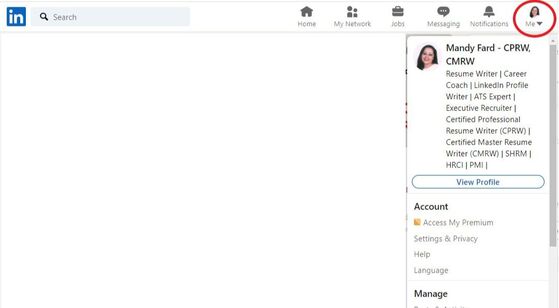
Click "Me" on your LinkedIn profile
Step 02: Find “Settings & Privacy”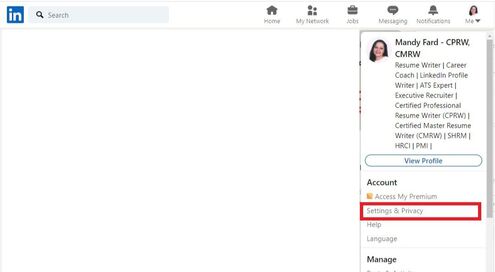
Step 02: Find “Settings & Privacy”
Step 3: Other Applications
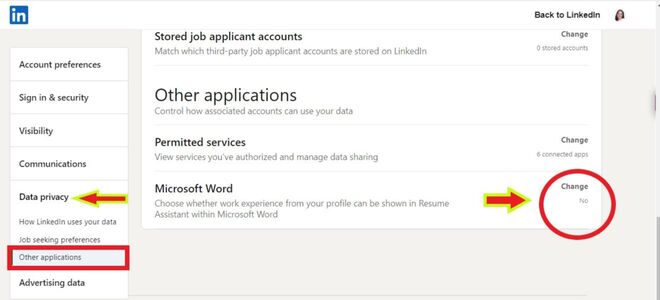
Step 03: Other Applications
Step 04: Resume Assistant Integration
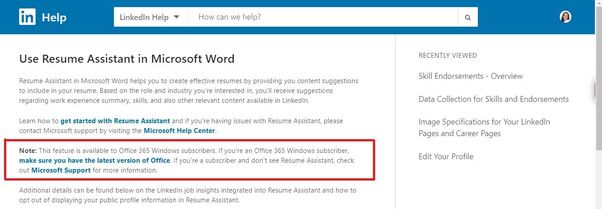
Step 04: Resume Assistant Integration
Step 05: Changing This Setting In LinkedIn's Mobile App
|
Award-winning resume writing services
Categories
All
powered by Surfing Waves
AuthorMandy Fard is a Certified Professional Resume Writer (CPRW, CMRW) and Recruiter with decades of experience in assisting job seekers, working directly with employers in multiple industries, and writing proven-effective resumes. 
Archives
July 2024


|

-
Greater Los Angeles
and Kern County
-
[email protected]
.


 RSS Feed